

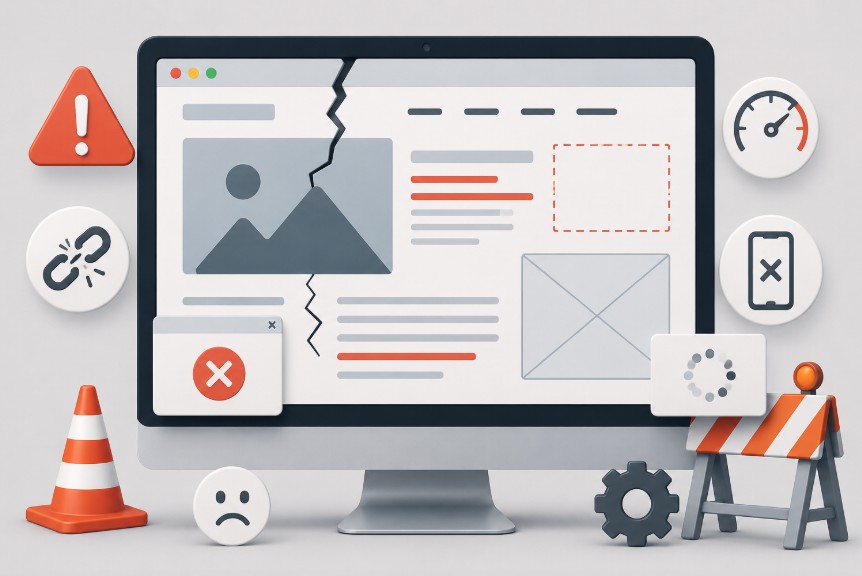
Your website may be getting traffic, but is it converting?
Many businesses assume low enquiries, sales, or bookings are caused by a traffic problem. But the real issue is what happens after someone lands on the website.
A site can look professional yet quietly lose potential customers due to small conversion barriers. These are not obvious design flaws but hidden friction points that make people hesitate, get confused, or leave before taking action.
The result is costly because you spend heavily on driving traffic to websites that are not built to convert it. This is where a conversion-focused website becomes critical — one that combines clear messaging, strong user experience, trust signals, and effective development to turn visits into enquiries.
This article explores common website mistakes that reduce conversion rates and how businesses can fix them.
Your value proposition is not clear within seconds
Most visitors decide within seconds whether a website is relevant.
They leave if they cannot immediately answer:
- What you offer
- Who it is for
- Why they should choose you
- What they should do next
This often happens when websites rely on vague phrases such as “innovative solutions” or “quality service you can trust.” These statements may sound professional, but they do not tell visitors enough about the actual value of the business.
Fix this by making your headline and opening section clear, direct, and customer-focused. Visitors should not have to scroll, guess, or read several paragraphs before understanding whether your business is right for them.
Your call-to-action is weak, hidden, or inconsistent
A common mistake is assuming visitors will know what to do next. If the CTA is unclear or changes too often across the site, users may drop off.
“Contact us” is a common example because it creates uncertainty.
The visitor thinks:
- What happens after I click?
- Am I going to be sold to?
- How much time will this take?
The more uncertainty a CTA creates, the lower the conversion rate.
Stronger CTAs reduce perceived risk by communicating a clear outcome.
Examples:
- Book a 15-Minute Strategy Call
- Request a Quote
- Download the Guide
- Speak to an Expert
High-converting websites lead users toward one primary action and repeat it consistently throughout the page. Don’t push multiple CTAs on the same page to avoid attention split.
Your website creates too much friction
Even interested visitors leave if the process feels difficult. Conversion problems are often caused by small friction points that interrupt the user journey.
Common friction points include:
- Long contact forms
- Slow-loading pages
- Confusing navigation
- Pop-ups that interrupt the experience
- Forms that are hard to use on mobile
For service businesses, asking for too much information too early reduces enquiries. For e-commerce, complicated checkout steps can stop purchases.
These small interruptions affect the user experience and increase the abandonment rate. A frustrating website also makes the business feel inefficient and harder to trust.
Review the full user journey from landing page to conversion. Shorten forms, remove unnecessary steps, improve page speed, simplify navigation, and test the process on both desktop and mobile. The easier it is for someone to take action, the more likely they are to convert.
Your copy talks too much about the business, not the customer
Many websites focus heavily on the company:
“We are experienced.”
“We provide quality service.”
“We offer tailored solutions.”
These statements build credibility, but they do not drive actions.
A stronger website connects what the business does to what the customer wants to achieve. Instead of only describing services, the copy should explain the outcome, benefit, or problem being solved.
Shift the focus from “what we do” to “how this helps you.” Each key section should make the visitor feel understood and show them why the offer is relevant to their situation.
There is not enough trust before the ask
Trust is built through evidence, not claims. But most websites ask for action before building confidence.
Common trust signals that you may include:
- Testimonials with specific results
- Case studies with measurable outcomes
- Verified Reviews
- Industry certifications
- Clear pricing or process information
- Before-and-after examples
The right trust signals may depend on the business, but the goal is the same: Remove the doubt at the moment of decision.
Important objections are left unanswered
Why do website visitors often leave in the middle of scrolling?
Because they still have unanswered questions.
- How much does it cost?
- How long does it take?
- Is this right for my situation?
- Can I trust this provider?
- What makes this different from competitors?
If these are not answered immediately, users delay or switch to competitors.
Strong conversion pages do not wait for questions. They answer them upfront.
Identify the questions customers commonly ask before they buy, book, or enquire. Then answer those questions clearly throughout the page, especially near CTAs and decision-making sections.
Remember: If your website does not provide clarity, another site will.
The mobile experience is treated as an afterthought
Some websites may look polished on a large screen while being frustrating on a phone. This gap negatively impacts conversion.
Common mobile conversion issues include:
- Text that is too small to read
- Buttons that are hard to tap
- Forms that are difficult to complete on a small screen
- Menus that are hard to navigate
Review your website from a mobile-first perspective. Check whether the headline is clear, the CTA is easy to find, buttons are easy to tap, forms are simple, and the page loads quickly. Mobile users should be able to understand the offer and take action effortlessly.
Conversion problems are often small but costly
Improving conversion rate does not always require a full website rebuild. A website should not only look good. It should guide visitors toward action with confidence. By fixing the mistakes that quietly weaken conversions, businesses can get more value from the traffic they already have.