

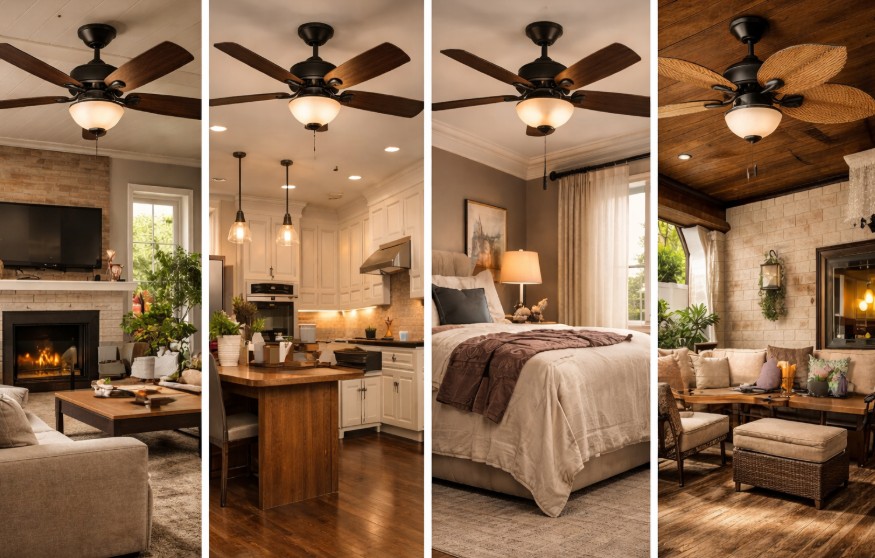
As electricity prices rise and summer temperatures climb, homeowners are constantly searching for ways to stay cool without driving up monthly utility bills. Air conditioning is effective, but it’s also one of the most energy-intensive systems in the home. That’s where ceiling fans come in. By improving air circulation and creating a wind-chill effect, ceiling fans help you feel cooler so you can raise the thermostat several degrees and still remain comfortable.
According to the U.S. Department of Energy, using ceiling fans can allow you to increase your thermostat setting by about 4°F with no reduction in comfort. Installing fans in key rooms can lead to meaningful savings throughout the hottest months of the year.
Here are five rooms where ceiling fans can make the biggest difference instead of expensive air conditions systems that can break down.
5 Ideal Rooms for Ceiling Fans
- Living Room
The living room is often the most frequently used space in the home. Whether you’re relaxing, entertaining guests, or spending time with family, this area tends to accumulate heat from electronics, lighting, and body warmth. Because it’s a central gathering space, the air conditioner often works harder here than anywhere else. You can see a wide selection of fans from Hunter Fan here: https://www.hunterfan.com/
A ceiling fan helps distribute cooled air evenly across the room, preventing hot spots and reducing the need to lower the thermostat. In larger living rooms, a fan with a wider blade span can push air effectively across the entire space. This allows you to rely less on constant air conditioning while still maintaining a comfortable environment for everyday activities.
- Bedroom
Quality sleep becomes harder when temperatures rise. Many people lower their thermostat at night to stay comfortable, which can increase energy usage significantly. Installing a ceiling fan in the bedroom provides an efficient alternative.
The gentle breeze from a fan helps regulate body temperature and reduces the need for intense overnight cooling. Many homeowners find they can raise their thermostat several degrees and still sleep comfortably. Ceiling fans also create soothing white noise, which can improve sleep quality for some people. Over time, the energy savings from nighttime cooling adjustments can add up quickly.
- Kitchen
Kitchens are natural heat generators. Ovens, stovetops, dishwashers, and even refrigerators release heat into the air, especially during meal preparation. When cooking in summer, the temperature in this room can rise rapidly, forcing your air conditioner to compensate.
A ceiling fan improves ventilation and moves hot air away from the cooking area, helping maintain a more balanced temperature. This reduces the cooling burden on your HVAC system and makes the kitchen a more pleasant space to work in. Even when you’re not cooking, the fan helps circulate air and prevent lingering warmth from appliances.
- Home Office
With remote work becoming more common, the home office has become one of the most occupied rooms during the day. Computers, monitors, and other electronics produce heat, and long hours in a warm room can quickly become uncomfortable.
A ceiling fan in your workspace allows you to keep productivity high without blasting the air conditioner all day. Because the room is occupied for extended periods, the fan’s efficiency can significantly reduce cooling costs over the course of the summer. This small upgrade can make a big difference in comfort during long work sessions.
- Covered Patio or Outdoor Living Area
Ceiling fans aren’t limited to indoor spaces. Outdoor-rated ceiling fans are designed to withstand humidity and temperature changes, making them perfect for covered patios and porches. While they don’t reduce outdoor temperatures, they improve comfort by increasing airflow and reducing the feeling of heat and humidity.
By making outdoor spaces more comfortable, you may find yourself spending less time indoors with the air conditioner running. Entertaining guests, dining, or relaxing outside becomes more appealing, which naturally reduces indoor cooling demands and saves energy.
Maximizing Efficiency with Proper Fan Use
Installing ceiling fans in the right rooms is only part of the equation. To maximize energy savings, make sure your fans are set to rotate counterclockwise during summer. This pushes air downward and creates the cooling breeze you feel on your skin. It’s also important to remember that fans cool people, not rooms, so turn them off when a space is unoccupied.
Choosing energy-efficient models can further boost savings. Many modern fans use advanced motors that consume minimal electricity while delivering powerful airflow. Pairing ceiling fans with smart thermostat settings creates a powerful combination for reducing summer energy costs.
A Small Upgrade with Big Impact
Ceiling fans are one of the most affordable and practical upgrades a homeowner can make. By installing them in high-use rooms like the living room, bedroom, kitchen, home office, and covered patio, you create a more comfortable home while reducing reliance on air conditioning. The result is a cooler living environment, lower energy bills, and a smarter approach to summer comfort.