

Key Takeaways
- The T3 slip reports income from trusts, such as mutual funds and ETFs.
- It includes various income types, such as dividends, capital gains, and returns of capital.
- Accurate reporting of T3 slip information is crucial for tax compliance.
For Canadian investors, accurately reporting investment income is essential for tax compliance. One critical document in this process is the T3 slip, which details income from trusts, including mutual funds and exchange-traded funds (ETFs). This guide will help you understand the T3 slip and ensure you report your investment income correctly.
For a detailed breakdown of the T3 slip, including its components and reporting requirements, refer to Questrade’s comprehensive guide, “T3 slip explained.” Questrade, a leading Canadian online brokerage, offers valuable insights into tax documents to help investors navigate their tax obligations effectively.
What Is a T3 Slip?
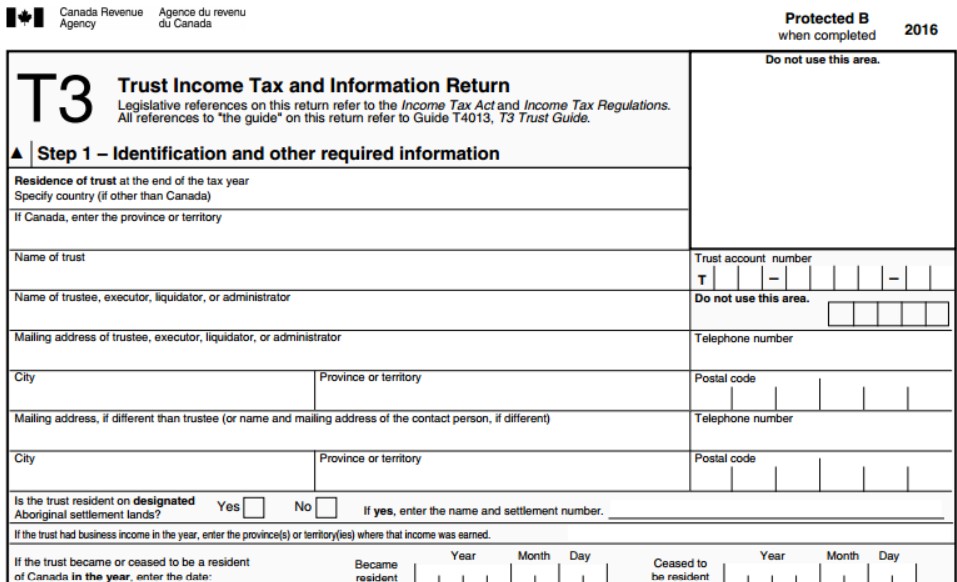
A T3 slip, officially known as the Statement of Trust Income Allocations and Designations, is a tax document issued by a trust to its beneficiaries. It reports various types of income earned from trust investments, such as mutual funds, ETFs, and real estate investment trusts (REITs). This slip is essential for accurately reporting investment income on your tax return.
The T3 slip serves a dual purpose for investors and the Canada Revenue Agency (CRA) alike. From the investor’s perspective, it breaks down the allocated investment income that must be declared on a personal income tax return, helping ensure tax compliance and transparency. From the CRA’s perspective, it’s a key compliance tool for tracking income earned from trust-based investments nationwide.
Who Receives a T3 Slip?
Investors holding units in mutual funds, ETFs, or other trust-based investments within non-registered accounts will receive a T3 slip. It’s important to note that investments held in registered accounts, such as Registered Retirement Savings Plans (RRSPs) or Tax-Free Savings Accounts (TFSAs), do not generate T3 slips, as income in these accounts is tax-sheltered.
You may also receive a T3 slip if you are a beneficiary of a personal or family trust, or if you have earned income via certain structured notes or real estate investment trusts. T3 slips are not exclusive to traditional investment products; they can also be issued in connection with estate income, testamentary trusts, and certain charitable remainder trusts. When you receive multiple slips, keep each one, as each reports specific amounts, and all are required for your return.
Understanding T3 Slip Boxes
The T3 slip contains several boxes, each representing a different type of income or credit. Key boxes include:
- Box 32: Capital gains
- Box 26: Other income
- Box 42: Return of capital
Other notable boxes you might encounter include Box 21 (Income from Canadian sources), Box 49 (Actual amount of eligible dividends), and Box 50 (Taxable amount of eligible dividends). Some T3 slips may also detail foreign income earned and foreign non-business income tax paid, which must be reported and may entitle you to a foreign tax credit.
Understanding these boxes is crucial for accurate tax reporting. For instance, amounts in Box 42 (Return of Capital) are not immediately taxable but reduce the adjusted cost base of your investment, affecting future capital gains calculations.
It’s also important to note that in some years, your mutual fund or ETF may not distribute any capital gains or return of capital, which would result in zeroes in those boxes. Checking each slip and ensuring it matches the income types shown on your tax forms will help you avoid errors.
Reporting T3 Slip Income on Your Tax Return
When filing your tax return, each box on the T3 slip corresponds to a specific line on the return. For example:
- Report capital gains (Box 32) on line 12700.
- Report other income (Box 26) on line 13000.
If you receive dividends, eligible or otherwise, be sure to report the grossed-up taxable amount (Box 50 for eligible dividends) and claim any federal dividend tax credit shown on your slip. If you have foreign income, the amount (often shown in Box 25) and any foreign taxes paid (Box 34) must be reported, and you may be able to claim a corresponding foreign tax credit.
If you use tax preparation software, most programs are equipped to guide you through entering amounts from each box, minimizing the risk of misplaced entries. However, be prepared to manually enter information if your brokerage doesn’t offer automatic downloads from CRA’s “Auto-fill my return” service.
Common Mistakes to Avoid
Common errors when dealing with T3 slips include:
- Overlooking the slip due to its late arrival (up to 90 days after year-end).
- Misreporting amounts, especially the return of capital.
- Failing to adjust the cost base of investments for return of capital.
Other mistakes include forgetting to report foreign income, misreading the slip and reporting gross instead of net amounts, or double-counting distributions reported on both the T3 slip and brokerage statements. Always reconcile your tax slips with your brokerage’s year-end summary for accuracy.
Being vigilant about these aspects can prevent future complications.
When to Expect Your T3 Slip
T3 slips are typically issued by the end of March, as trusts have 90 days after their year-end to distribute them. It’s advisable to wait for all tax slips before filing your return to ensure completeness.
If you have multiple accounts with different institutions, be patient and check each platform, as slips can arrive at different times. Brokerage accounts often notify clients when the slips are available for download online, while paper copies may be mailed by default. Consider enrolling in electronic delivery to access your documents sooner and avoid mail delays.
Resources for Further Assistance
For more detailed information, consult the Canada Revenue Agency’s official guide to T3 slips. Additionally, financial institutions like Questrade offer educational resources to help investors understand tax documents. For instance, their comprehensive guide on the T3 slip provides valuable insights into its components and reporting requirements.
If you are ever unsure about how to report an item from your T3 slip, contact your investment provider or a qualified tax professional for clarification. In addition, online investor forums and CRA’s helpline can provide helpful guidance for unique or complex situations.
By familiarizing yourself with the T3 slip and its implications, you can confidently manage your investment income reporting and ensure compliance with Canadian tax laws. Thorough review and timely reporting not only give peace of mind but also help you maximize eligible credits and deductions for your investment earnings.